

Diverse Thermoacoustic Devices: The Hotter It Gets, the More It Cools?
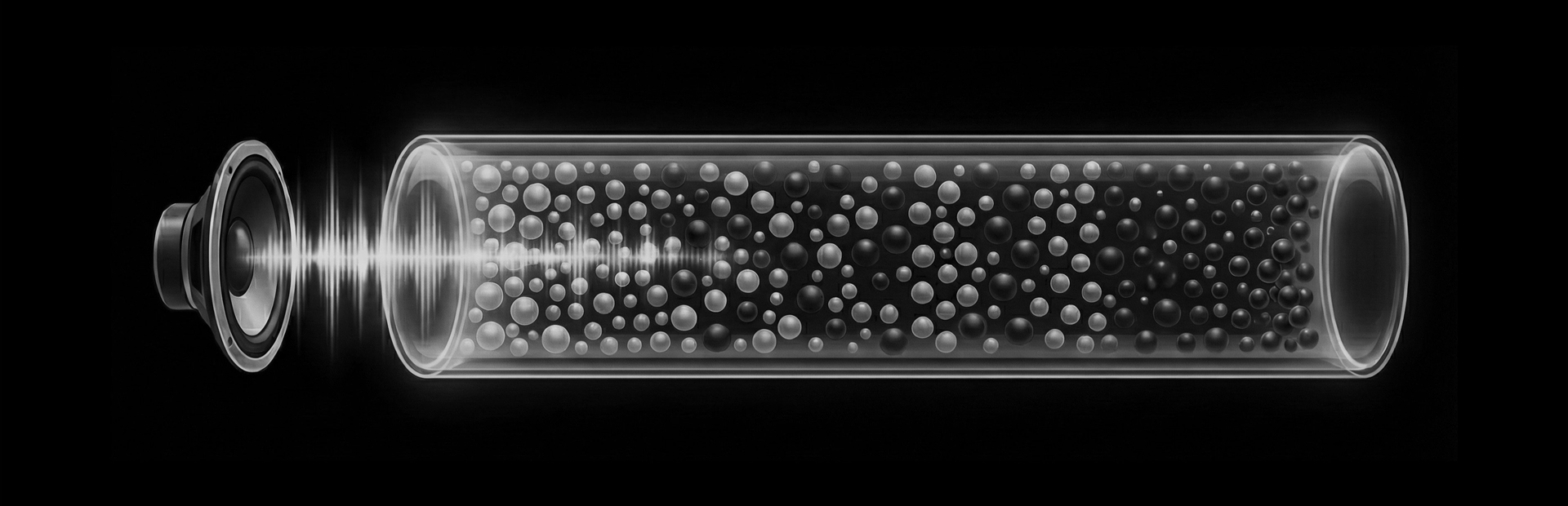
Both heat and sound waves are familiar to us, yet it is surprisingly little known that heat and sound waves can be interconverted. In thermoacoustic devices that utilize thermoacoustic phenomena, it is possible to cool using sound waves or generate sound waves using heat.
- Generating sound with heat (= Thermoacoustic Engine)
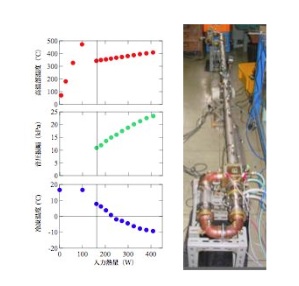
The heating section of the thermoacoustic engine is heated to about 300°C. When the critical temperature is reached, self-excited oscillation of sound waves begins at the resonance frequency of the helium-argon mixed gas filling the device, and it starts operating as a thermoacoustic engine. - Cooling with sound (= Thermoacoustic Cooler)
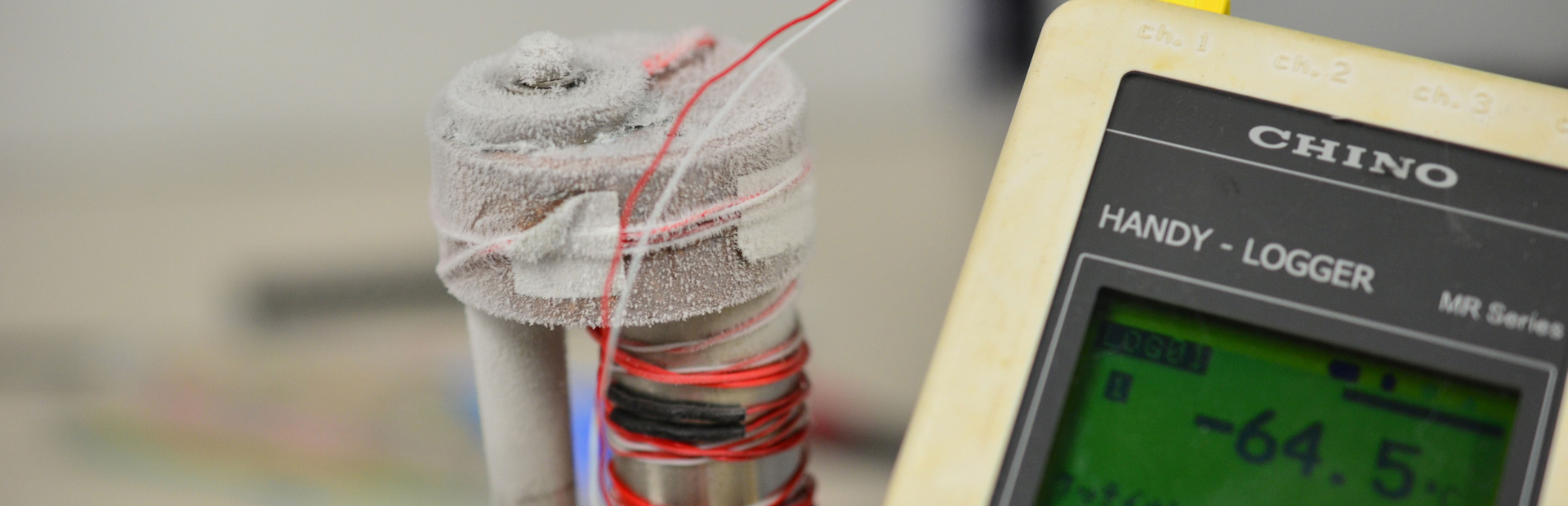
The acoustic power generated by the thermoacoustic engine flows into the thermoacoustic cooler through a pipe filled with gas. In the thermoacoustic cooler, a cycle similar to the reverse Stirling cycle takes place, and a low temperature is obtained. - Generating sound with heat (= Thermoacoustic Engine + Thermoacoustic Cooler)
The more it is heated, the increasing acoustic power achieves lower temperatures. A low temperature of minus 10°C can be achieved without any moving parts.
Physics of Thermoacoustic Phenomena: Local Energy Conversion and Local Entropy Generation
How can we rationally understand a thermal engine without moving parts?
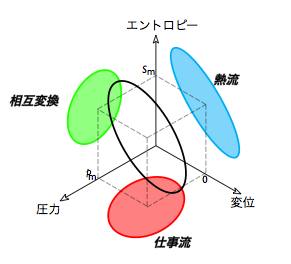
Thermodynamics has developed alongside the birth of thermal engines. The first law of thermodynamics (law of conservation of energy), which relates "heat" and "work," and the second law of thermodynamics (law of increasing entropy), which describes the magnitude of entropy entering and leaving a system, are universal physical laws that hold for all thermal engines, including steam engines and internal combustion engines. So, are heat, work, and entropy physical concepts effective enough for thermoacoustic devices, which are thermal engines without pistons? Using two energy flows proposed to understand thermoacoustic phenomena, "heat flow" and "work flow," along with "entropy flow," may lead to a new way of understanding thermal engines. Through experiments, we aim to build a new academic field at the boundary between fluid dynamics and thermodynamics.
How does thermoacoustic energy conversion occur?
How can a sound wave perform energy conversion without a solid piston? Where exactly in the narrow channel does this occur, and how much energy conversion takes place? To develop efficient and high-output thermoacoustic engines and coolers, it is necessary to clarify these questions. To build a solid foundation supporting the development of thermoacoustic engineering, it is important to experimentally investigate local energy conversion and local entropy generation based on direct measurement of oscillating quantities related to fluid elements.
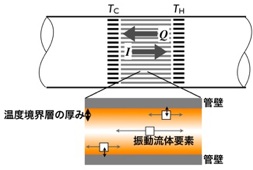
An oscillating fluid within a narrow channel with a temperature gradient performs the thermodynamic processes of "compression," "expansion," "heating," and "cooling" during one period of a sound wave. As a result, axial "heat flow" and "entropy flow" are generated, and mutual conversion between "heat flow" and "work flow" also occurs. In other words, it is thought that each individual fluid element performs energy conversion. The development of excellent thermoacoustic engines and coolers requires that each element maximizes its capabilities most efficiently..
Thermal Engines Using Sound Waves: Towards the Realization of Thermoacoustic Engines and Coolers
- No moving parts required for energy conversion by sound waves
- As an external combustion engine, solar energy and waste heat can be used
- Extremely simple structure consisting only of a resonance tube, a regenerator, and a pair of heat exchangers
- Non-CFC refrigeration using inert gas as the working fluid
- Inherently high efficiency, being a Stirling cycle thermal engine
[1]Elucidating Energy Conversion Mechanisms
Understanding how energy conversion occurs in a thermoacoustic engine is a task that must be clarified to improve its performance. We have conducted research on the self-adjusting function of the sound field and vibration mode selection of thermoacoustic engines that perform energy conversion without moving parts. Currently, we are advancing research to identify the most essential physical quantities in acoustic power amplification by traveling sound waves and to clarify mode-mode interaction in shock waves within a gas column resonance tube through sound field measurement and energy flow measurement.
![[1]Elucidating Energy Conversion Mechanisms](images/research/research04.jpg)
[2]Proposing New Devices
![[2]Proposing New Devices](images/research/research05.jpg)
Known thermoacoustic devices utilizing thermoacoustic phenomena include thermoacoustic engines that generate sound waves from heat, thermoacoustic refrigerators that cool using sound waves, and "dream pipes" that promote heat dissipation using sound waves. We have proposed a heat-driven cooler prototype that combines a sound amplifier and silencer using heat with a thermoacoustic engine and a thermoacoustic cooler. While conducting quantitative efficiency evaluation of these new devices, we are also conducting research on a thermoacoustic engine generator prototype. We aim to develop these into new energy conversion systems with no moving parts.
[3]Establishing Fundamental Experimental Techniques
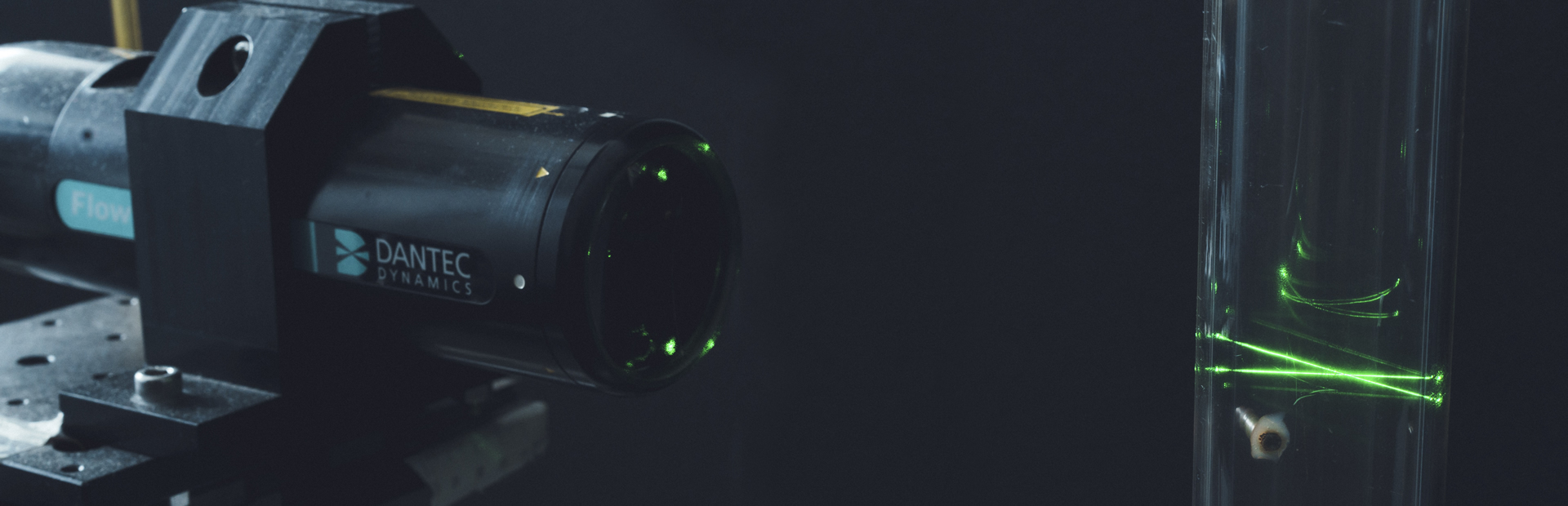
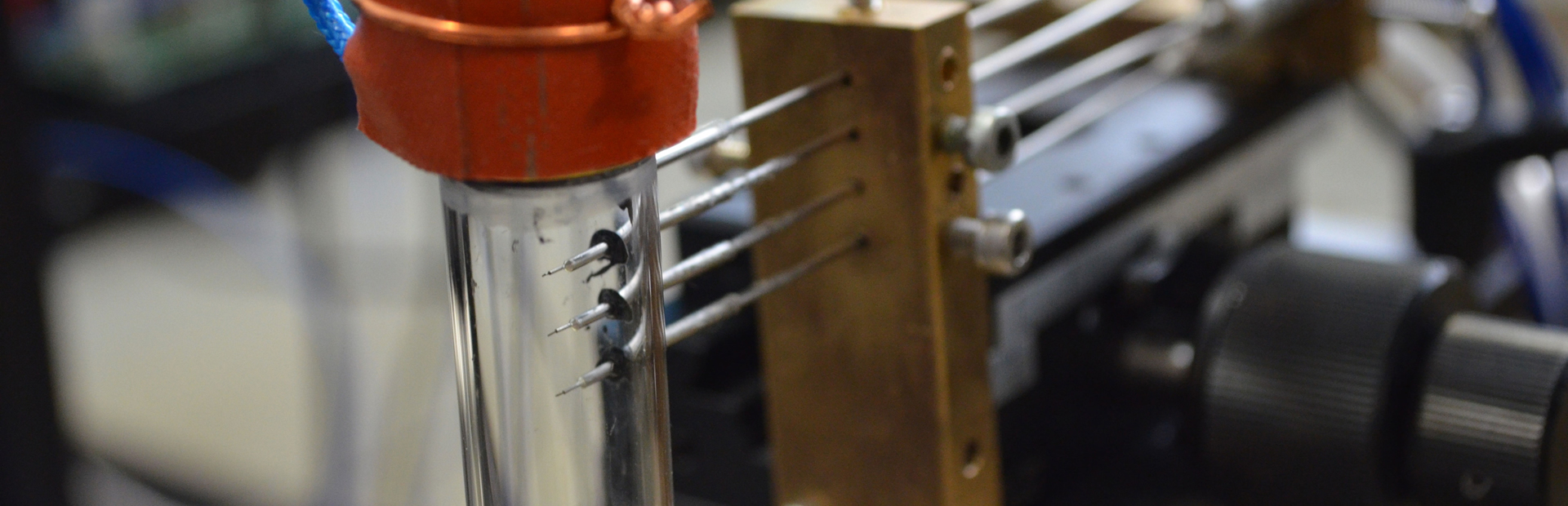
Direct measurement of work flow, representing acoustic power per unit cross-sectional area, became possible in 1998. Even today, the measurement techniques necessary for the experimental understanding of thermoacoustic phenomena cannot be said to be fully established. We aim for in-situ observation of energy conversion and observation of energy flow and entropy flow through multidimensional simultaneous measurement combining flow velocity fluctuation measurement focusing on light with pressure fluctuation measurement and gas temperature fluctuation measurement.
![[3]Establishing Fundamental Experimental Techniques](images/research/research06.jpg)
Complex Fluids & Wetting Phenomena
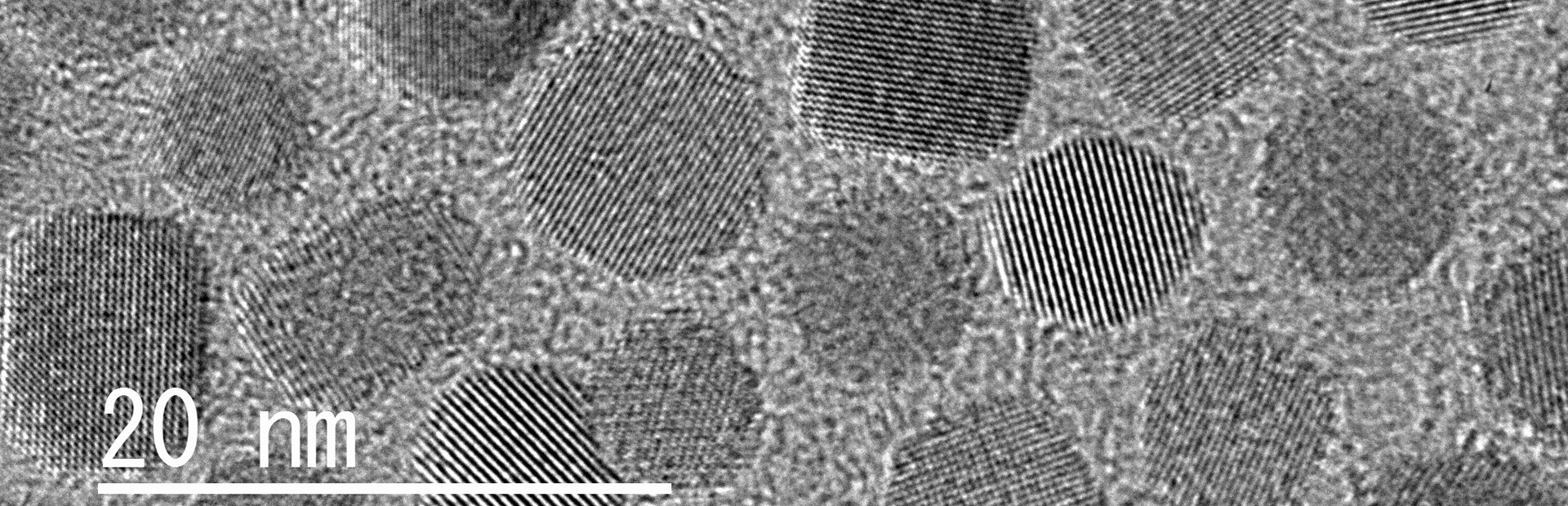
Complex fluids (or soft matter) such as colloidal dispersions, surfactants, and polymers are a group of substances with soft mechanical properties, and their flow plays an important role in the natural world and our daily lives. To control complex fluids used in engineering processes, it is essential to elucidate and understand the mechanisms of the phenomena that occur. However, understanding these phenomena is not easy due to the hierarchical nature inherent in complex fluids.
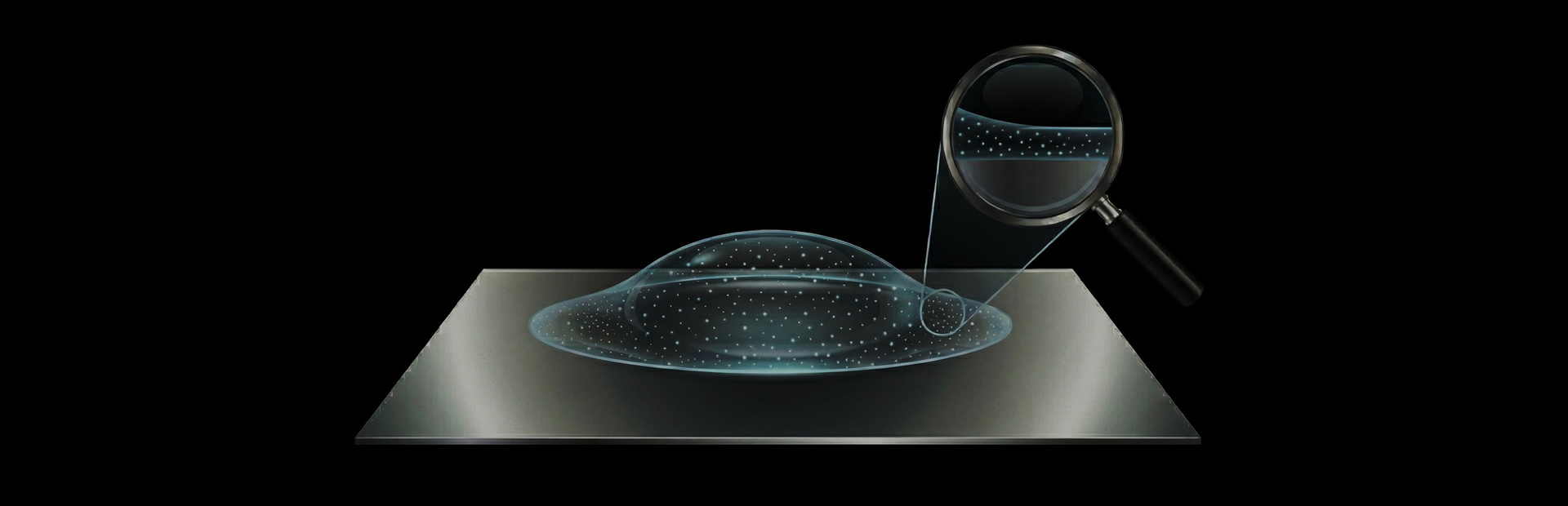
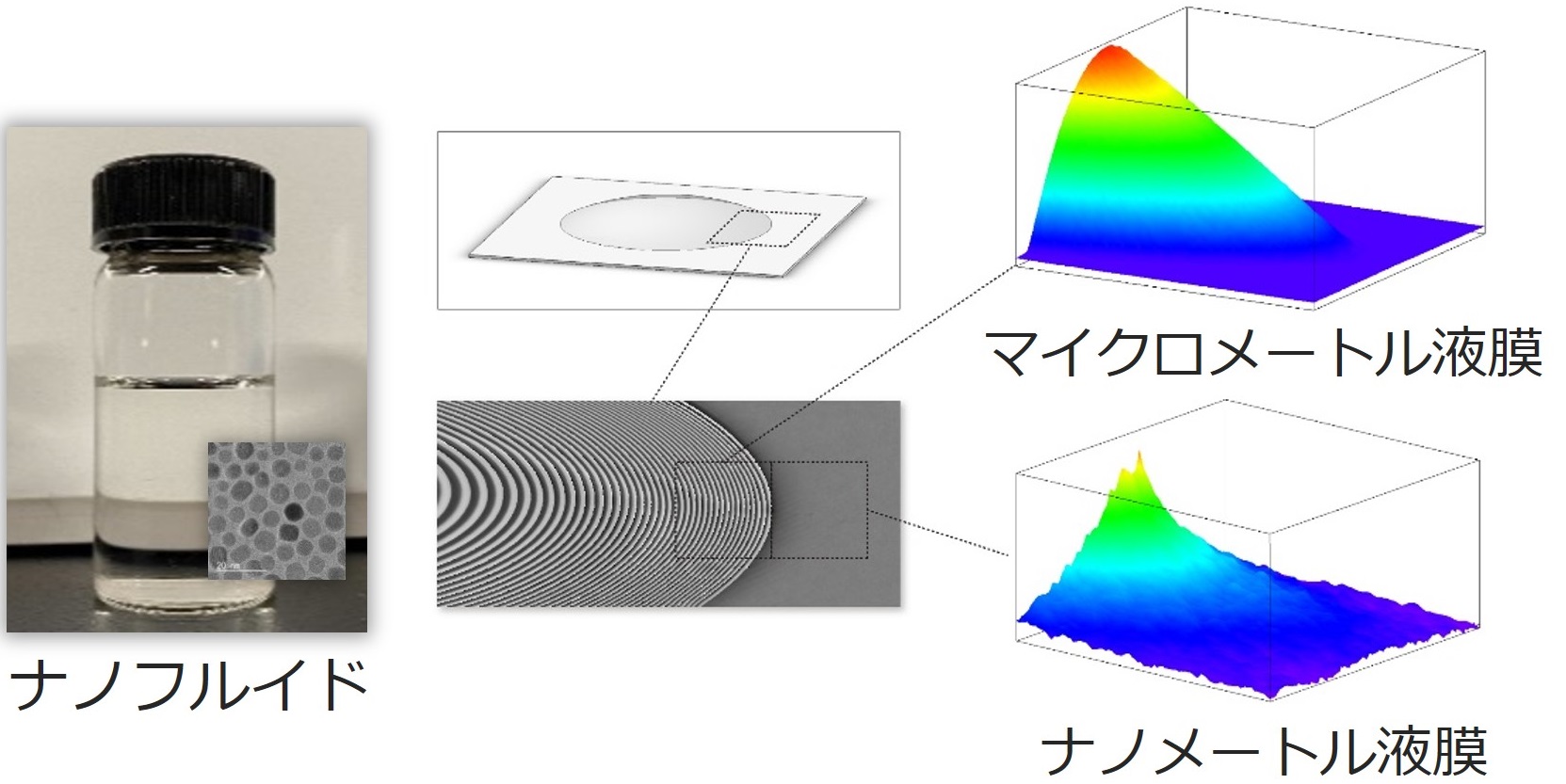
We are conducting research focusing on wetting phenomena widely observed in processes such as phase-change heat transfer and printing/coating, concerning complex fluids including nanofluids (nanoparticle dispersions), which are new functional fluid materials. In particular, we have developed a phase-shift ellipsometer for thin liquid films in the vicinity of the contact line where solid, liquid, and gas coexist, and are working to elucidate phenomena by performing liquid film shape measurements on the nano- to micro-meter scale. (Right figure:Shoji et al., Exp. Fluid, 62 (2021), 206).
Development of Optical Measurement Techniques
Phase-shifting Ellipsometer
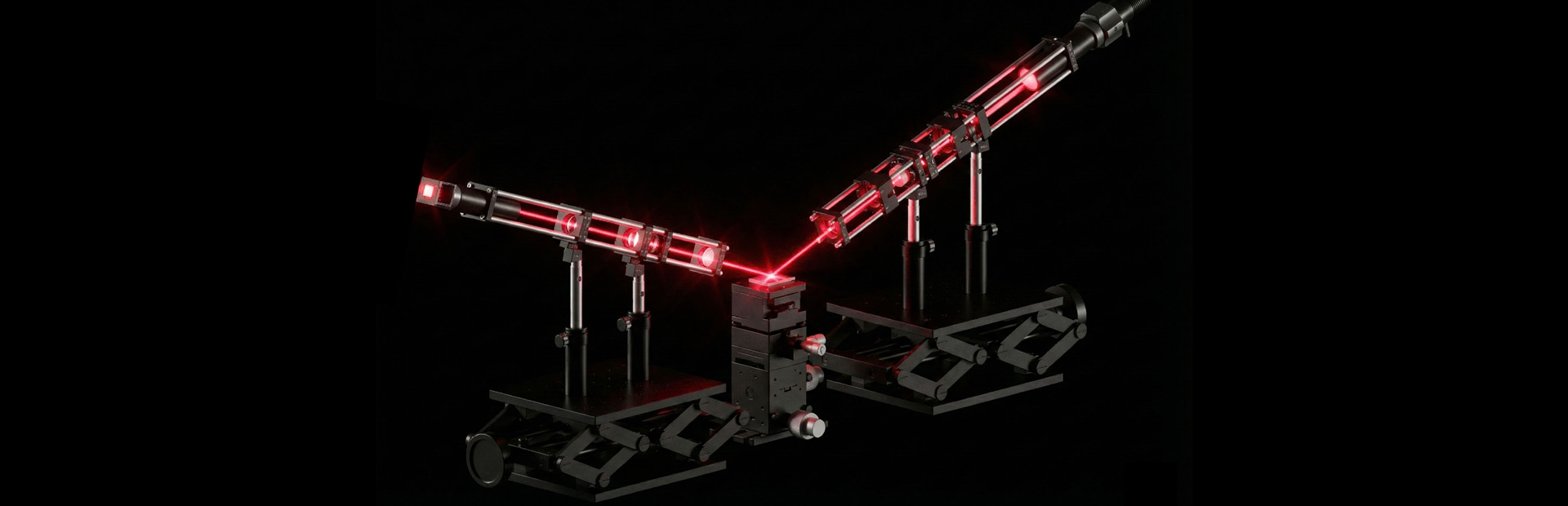
We have developed a phase-shift ellipsometer that enables two-dimensional and time-resolved measurement of nanometer-thin films by introducing phase-shift technology into ellipsometry. Furthermore, by using the principle of optical interferometry in combination, we have enabled droplet shape observation with a wide dynamic range from nanometers to micrometers while allowing film thickness measurement with a theoretical resolution of sub-nanometers. Through shape measurement that was difficult with direct observation, we are attempting a new approach to wetting phenomena, including complex fluids. (Shoji et al., Opt. Lasers Eng., 112 (2019), 145).
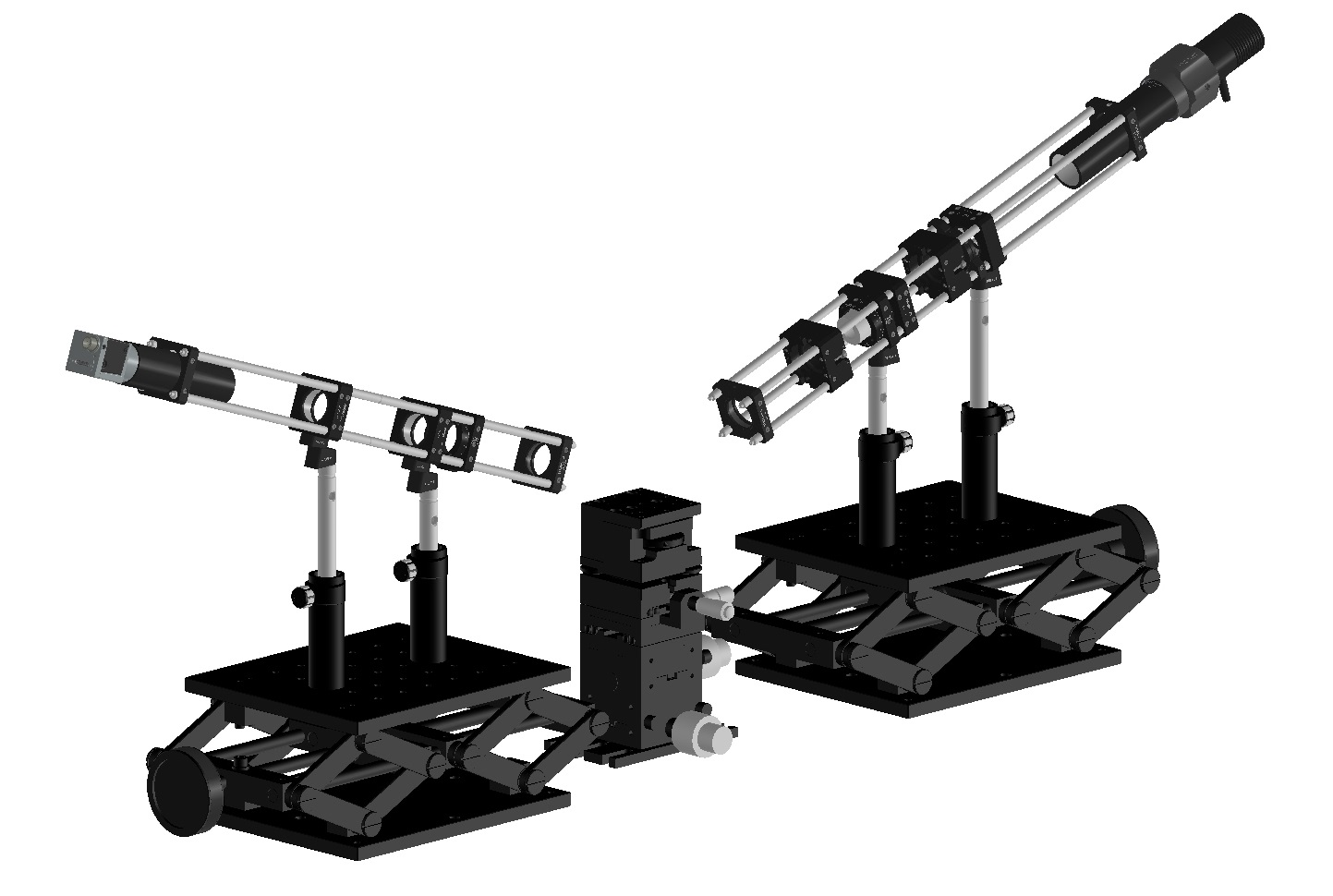
Phase-shifting Optical Interferometer
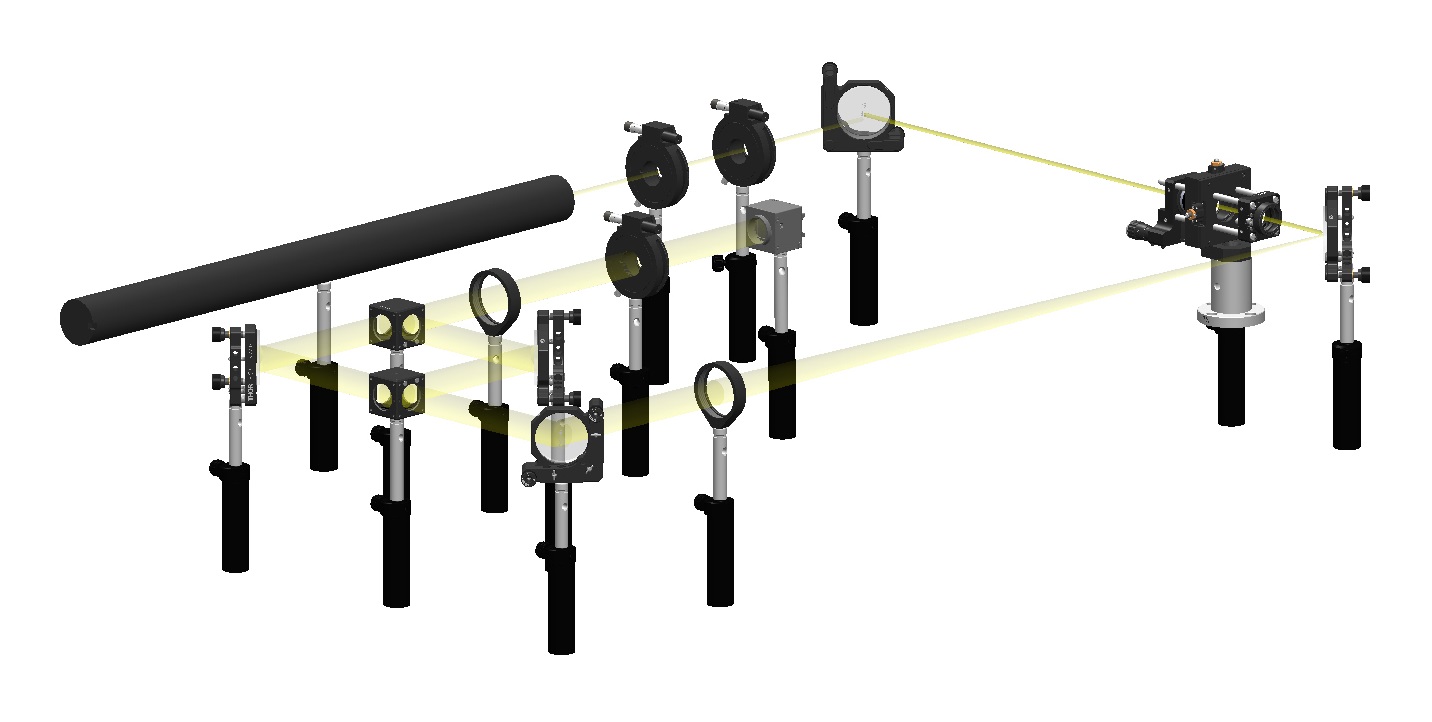
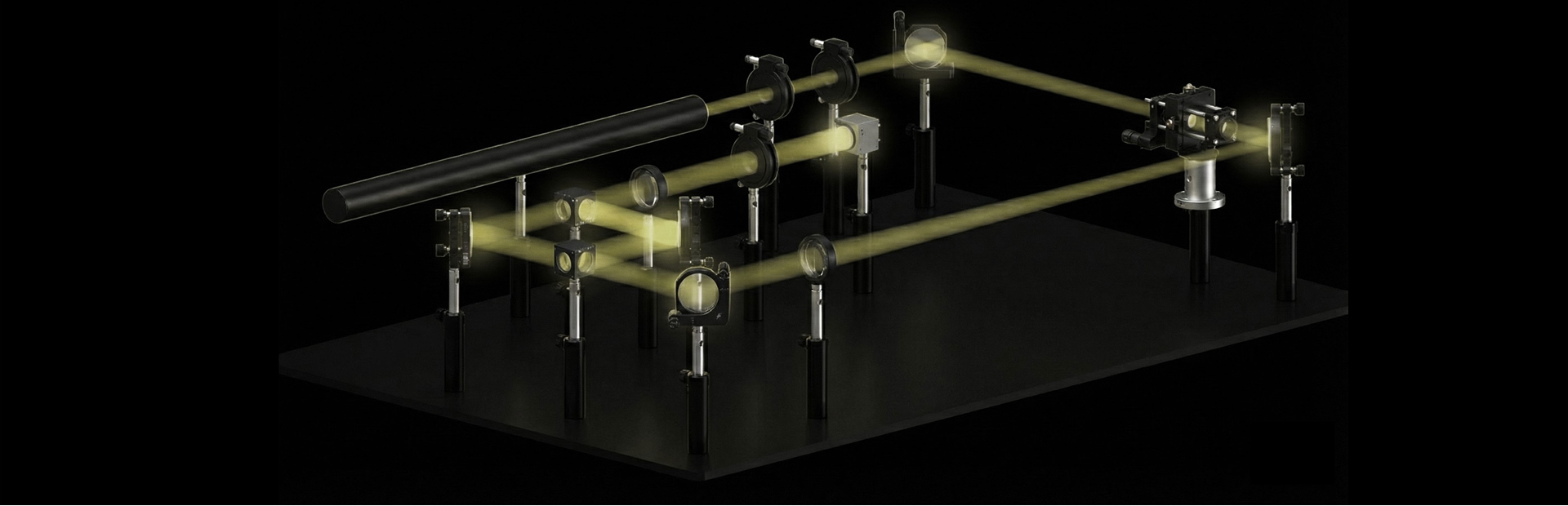
By introducing phase-shift technology into optical interferometry, we have enabled measurements with improved measurement and spatial resolution compared to conventional optical interferometry. Since this measurement method can measure the spatiotemporal distribution of density, temperature, and concentration, it is possible to observe heat and mass transport within various phenomena. We are currently working on observing transport phenomena within sound waves related to the aforementioned thermoacoustics(Shoji et al., J. Acoust. Soc. Am., 155 (2024), 2438)and mass transport in liquids.